Let's talk about the split that nobody names
Here's the thing: you can feel incredible pleasure alone with a device and still feel disconnected when your partner is in the room. That's not a contradiction. That's not a sign you don't love them. It's a very common gap, and it happens because solo pleasure and partnered pleasure use different neural pathways, different trust frameworks, and different emotional setups.
One is about your body and your rhythm. The other is about vulnerability, synchronization, and being witnessed. They're not the same skill, and nobody teaches you how to translate one into the other.
Why the disconnect happens in the first place
When you're solo, you control everything. Pressure, speed, timing, when you stop, what fantasy you hold in your mind, how fast you breathe. There's no performance, no coordination, no worry about what someone else is feeling or thinking.
Partner sex (or partner pleasure, more accurately) requires surrendering some of that control. You have to sync with someone else's pace. You have to tolerate being seen. You have to communicate what you need without worrying it'll bruise their ego or make them feel inadequate. Most people never learned those conversations, so instead of having them, they just shut down.
Add in a layer of mismatched desire, past disappointment, or just plain awkwardness, and suddenly your solo pleasure life feels a million miles away from what happens with your partner.
What a lemon clitoral vibrator actually changes here
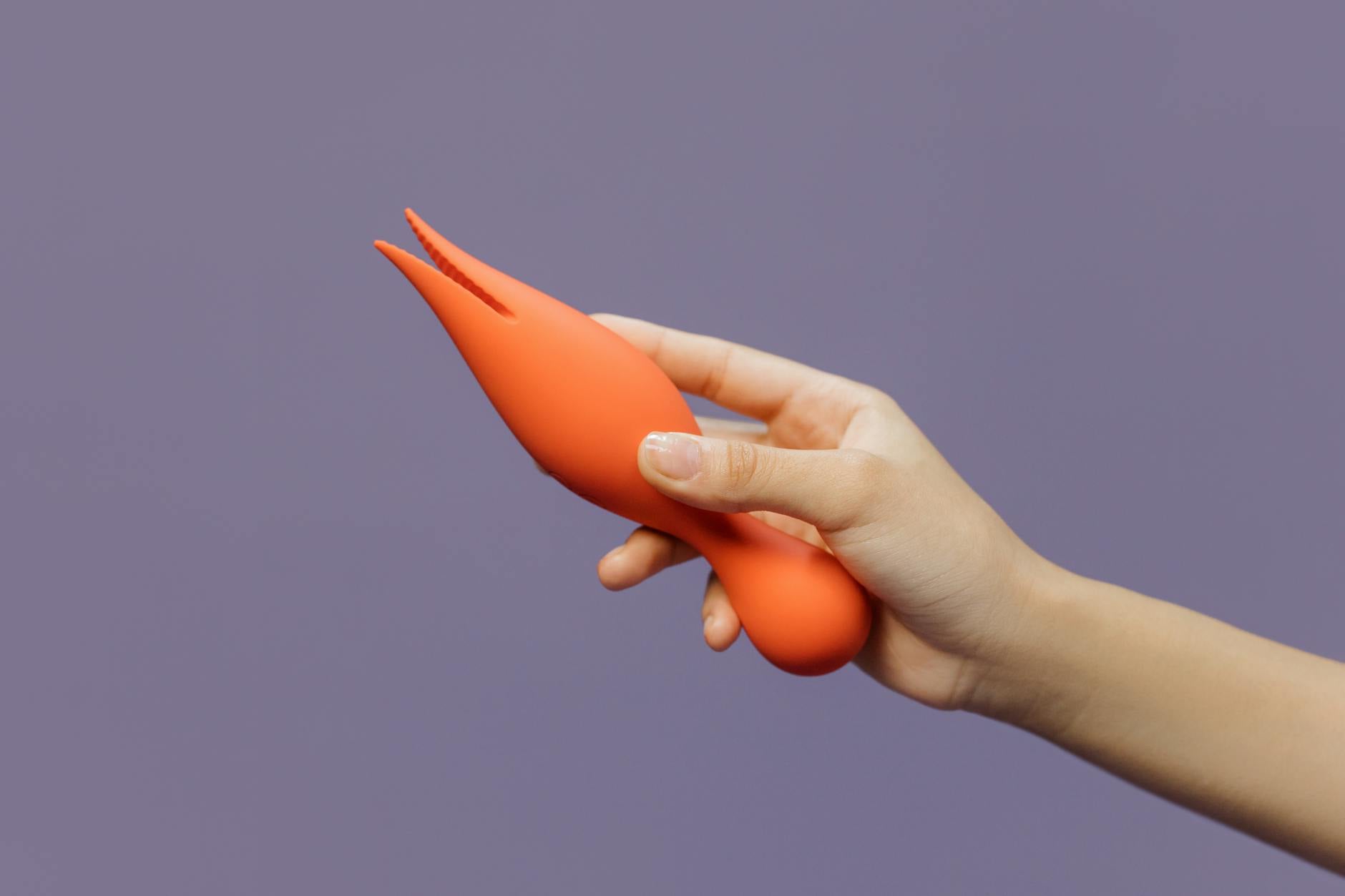
A device like the Lemon isn't a workaround for partnered intimacy. It's a bridge. Here's why it works differently than your hand alone.
First, it's a shared object. When your partner is involved, the vibrator becomes something external you're both using, not something that reads as a replacement for them. It's a tool in the room, like lube or a pillow. That psychological shift matters.
Second, it creates rhythm without requiring constant manual effort. Your partner can hold the device while you focus on sensation, vulnerability, and connection rather than logistics. You're not performing the mechanics. You're just receiving and responding.
Third, a lemon sexual toy has consistent, predictable sensation. Your hand gets tired. The pressure varies. A device maintains intensity, which means you can relax into a pattern instead of constantly adjusting. That consistency actually frees up mental space for intimacy.
Starting the conversation (the actual hard part)
Before you ever use a lemon vibrator with a partner, you have to say it out loud. Not subtly. Not during sex. Not as a joke. Actually say it.
Try this: "I want to explore something together that might help me feel more connected to you. Can we talk about that?"
Then tell them the truth. Not that they're not doing enough. Not that something's wrong with them. The actual truth: "When I'm alone, I can be in my body and feel really good. With you, my brain does other things, and I want to bridge that gap."
If they get defensive, that's information. It might mean they're scared they're not enough, or worried that a device means you don't want them. Those are real fears and they need actual reassurance, not reassurance-flavored sentences.
The best conversations I've mediated go like this: "I trust you. I want to build something where I feel as uninhibited with you as I do alone. Can we experiment together?" That frames it as something you're building toward, not something that's broken.
How to actually use a lemon clitoral vibrator together
Start with plenty of foreplay, but not because you "have to." You're building arousal the way a lemon adult toy performs best.
When you're ready, have your partner hold the device. This is the first key difference from using it alone. They have control over pressure and placement, and you get to be passive in a really specific, intimate way. Tell them what feels good. Direct them. Your job is not to stay quiet and endure.
The pattern most couples find easiest: broad strokes at medium intensity first, then narrower focus as arousal builds. Let your partner feel the rhythm of your responses. When you catch your breath or shift your hips, they'll know something's working. That feedback loop is where the intimacy lives.
Don't aim straight for orgasm. That's performance pressure, and that's exactly what kills the bridging work you're trying to do. Spend 10-15 minutes on sensation alone. Let your partner watch your face, feel your breathing change, experience you receiving pleasure. That's the whole point.
The patterns that actually work
Many couples find success with a structure like this: your partner touches you with their hands first, building arousal over 5-10 minutes. Then they introduce the lemon vibrator. The combination of skin-to-skin touch plus the device creates a much richer sensory experience than either alone.
Some partners like to use the device on themselves while they're intimate with you in other ways. That normalizes pleasure in the room without making it the only thing happening.
Others find that having you use the device while they touch you elsewhere (your inner thighs, your neck, your breasts) creates a kind of layered stimulation that feels more partnered than a device could alone.
The pattern doesn't matter as much as the conversation before you try it. You're not figuring out the "right" technique. You're building a shared language around what pleasure looks like when you're together.
What to do if it feels awkward (it might, and that's okay)
Sex can feel weirdly clinical when you introduce a new object. Your brain might go somewhere unsexy for a minute. Your partner might get in their head. That's completely normal.
If either of you feels awkward, name it out loud instead of powering through. "This feels a little weird right now" is not failure. It's data. You can pause, laugh about it, talk about what felt off, and try again.
Many couples find that the second or third time feels entirely different from the first. Your nervous system settles. The device becomes part of the landscape instead of a spotlight.
Some people find that a lemon sucker (another name for the same device) feels less intimidating if you incorporate it into foreplay rather than as the main event. Use it for 5 minutes, then transition to other kinds of touch. It's one flavor in a larger experience, not the headline.
When this actually bridges the gap
You'll know it's working when you start feeling sensations you didn't expect. When your partner's touch starts registering differently because you're less in your head. When you notice yourself responding to them rather than to the moment.
You'll also notice a shift in how you touch each other afterwards. The vulnerability you practiced together tends to spill into other parts of your connection. Not always directly sex-related. Sometimes it's just a new kind of honesty in conversation, or a steadiness in how you look at each other.
That's the actual bridge. It's not the device. The device just creates the conditions where you can practice being intimate without all the defense mechanisms that normally show up.
When to get support
If you've tried this approach a few times and still feel a wall between you, that's a sign to talk to a couples therapist. The disconnection might not actually be about pleasure. It might be about trust, resentment, or unprocessed hurt that needs professional guidance to untangle.
If your partner refuses to engage in this conversation at all, that's also important information. It might mean they're not ready, they're struggling with insecurity, or there's a deeper incompatibility about vulnerability that goes beyond sex.
None of that means you're broken. It means you need a different kind of help.
The part nobody says out loud
Lemon vibrators work because they're honest. They don't pretend to be something they're not. They're designed for pleasure, they feel good, and they don't ask you to hide that.
When you use one with a partner, you're basically saying: my pleasure is real, my body is real, and I want you to be part of that. That's a pretty vulnerable thing to do.
Build the bridge slowly. Talk before, during, and after. Let awkwardness be part of the process instead of a sign that something's wrong. Most couples find that the disconnection you feel now starts to soften the moment you stop pretending it isn't there and actually address it together.
People also ask
How do I bring up using a lemon clitoral vibrator with my partner without making them feel inadequate?
The key is framing it as something you want to explore together, not a replacement for them. Try: "I've noticed that I feel more in my body when I'm relaxed and not thinking about performance. I want to try something that might help me be more present with you." Focus on what you're building together, not what's missing. If they're still defensive, that's a conversation worth having with a therapist.
Can using a lemon vibrator alone hurt my ability to enjoy partnered sex?
Not inherently, but there's a real phenomenon called "vibrator dependency" where some people find that partnered touch feels less intense by comparison. The fix isn't to avoid vibrators. It's to also regularly experience pleasure through other kinds of touch so your nervous system stays responsive to variety. Mix solo vibrator time with hand stimulation and partnered touch.
What if my partner wants to use the lemon vibrator on themselves during sex?
That's completely healthy and surprisingly common. Some people find that using a clitoral vibrator while receiving penetration creates a sensation they can't get any other way. It's not a sign they're not satisfied with you. It's them knowing their own body and having the confidence to advocate for their pleasure. Support it.
How long does it usually take to feel less disconnected during partnered pleasure?
It varies, but most couples report a noticeable shift after 3-5 intentional times of using a device together. Your nervous system needs repetition to trust a new experience. The first time is always the weirdest. By the third or fourth, it starts to feel more natural.
Is it normal to feel more aroused with a lemon sexual toy alone than with a partner?
Yes, and it's usually about mental load, not desire. When you're alone, there's no performance anxiety, no coordination, no awareness of someone else's pleasure. That mental freedom is huge for arousal. The fix is building enough safety and communication with your partner that you can relax into that same mental state with them present.
Should I use the same lemon vibrator solo and with my partner, or buy a separate one?
Sharing is fine, but many couples prefer having their own devices. It removes any weirdness about "whose toy is this" and lets you experiment with what you each prefer. If you do share, just make sure it's clean between uses and that you're both comfortable with it.
References
The research on device use in partnerships consistently shows that communication before, during, and after is the strongest predictor of satisfaction, not the device itself. The Gottman Institute's work on emotional intimacy and vulnerability in relationships informs much of the approach here. The concept of "sexual negotiation" comes from contemporary sex therapy frameworks that emphasize consent, communication, and mutual pleasure building.