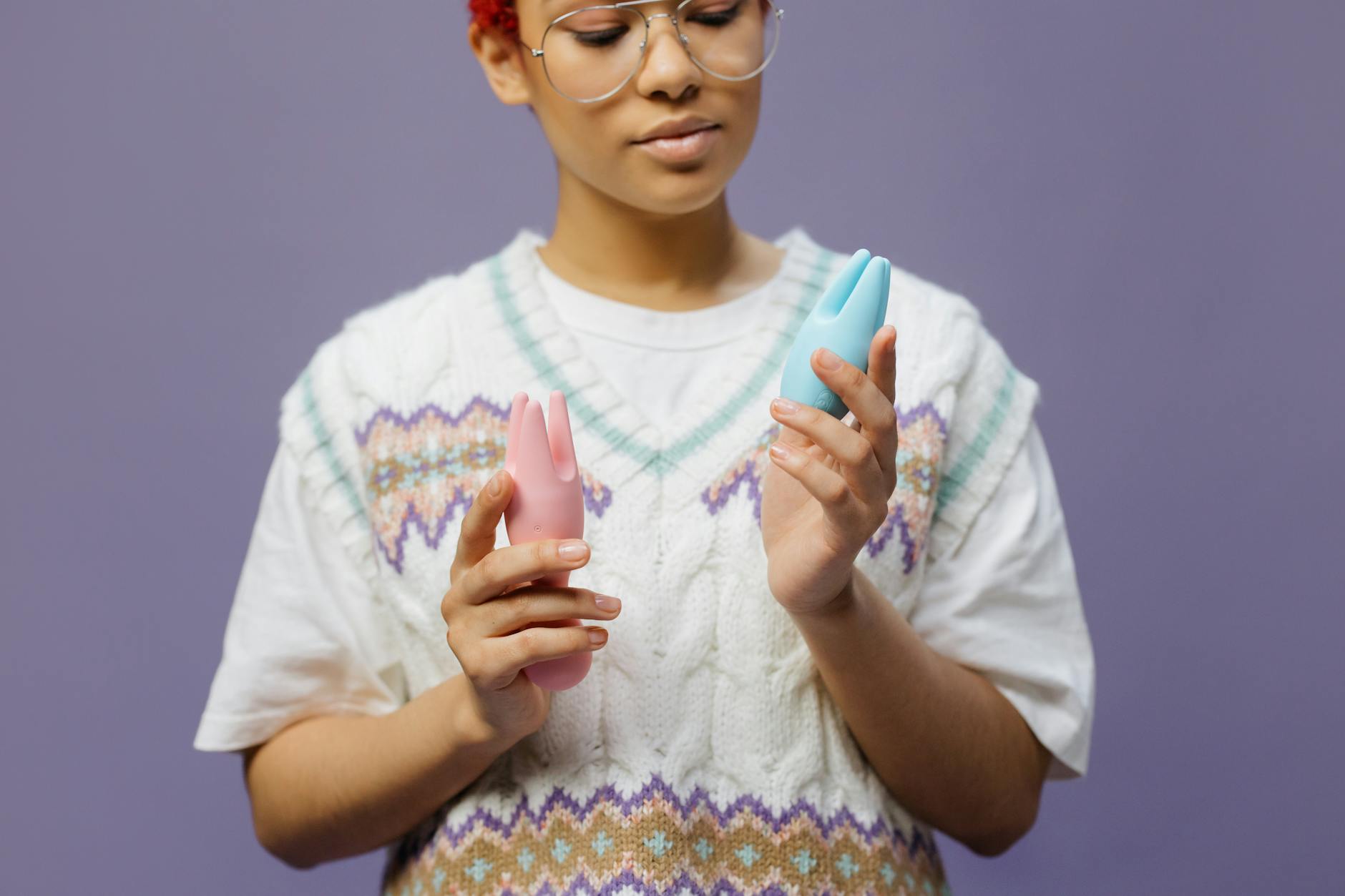
Let's be honest about medication and pleasure
Your medication didn't break you. But it probably changed something. SSRIs, certain blood pressure meds, hormonal birth control, even some allergy medications can flatten desire, delay orgasm, or numb sensation entirely. It's not a side effect you imagined. It's real, it's common, and it's manageable once you know what you're working with.
The good news? Reconnecting with pleasure is absolutely possible. It just requires a different approach than what worked before the medication kicked in.
Why medications affect arousal and sensation
There are a few pathways at play here. SSRIs (selective serotonin reuptake inhibitors) increase serotonin in your brain, which is great for mood but can dampen the dopamine spike that drives desire and the norepinephrine surge that creates physical arousal. It's not malice. It's neuropharmacology.
Hormonal birth control shifts estrogen and progesterone levels, which changes blood flow to the genitals and alters tissue sensitivity. Some blood pressure medications reduce blood flow directly. Antihistamines can dry out all the mucous membranes. Each one touches pleasure through a different mechanism.
What matters is this: the nerves are still there. The capacity for sensation and orgasm hasn't disappeared. Your brain's pleasure pathways are still intact. You're working with a different substrate, not no substrate at all.
The first step: lowering your expectations productively
I don't mean give up. I mean shift the goal. If you were used to climaxing in five minutes with minimal effort, that's probably not happening right now. That's not failure. That's information.
Instead of targeting orgasm as the finish line, aim for sensation. Can you feel warmth? Gentle buzzing? A building pressure? Start there. Orgasm comes later, after your body remembers what arousal feels like.
This matters because when you're chasing an outcome that isn't arriving, your nervous system tenses up. Tension kills arousal. Breaking the outcome dependency loosens that grip.
Why a lemon clitoral vibrator works differently under medication
The Lem uses suction rather than direct vibration. That distinction becomes crucial when sensation is muted or hypersensitive. With traditional vibrators, you're relying on the speed and intensity of oscillation to create sensation. Suction works differently. It creates a gentle pressure that builds gradually and engages a broader area of tissue.
For people whose medication has numbed direct clitoral touch, suction often works better because it's not trying to force sensation through a flattened nerve response. It's creating a sustained pressure that allows sensation to accumulate over time rather than demanding an immediate, intense response.
For people whose medication has made them hypersensitive, suction's gentler initial approach (patterns 1 and 2 are surprisingly subtle) means you won't overstimulate before arousal has a chance to build.
How to use the lemon vibrator when returning to pleasure
Start with the lowest settings. If you're used to a traditional vibrator at medium or high speed, pattern 1 on a lemon clitoral vibrator might feel almost nothing. That's exactly right. Sit with it. The goal in week one is familiarity, not orgasm. Let your nervous system notice the sensation without demanding a response.
Budget time differently. Medication-related numbness means arousal takes longer to build. Allocate 25 to 40 minutes, not 10. Half of that will be warm-up with no vibrator at all. Touch yourself with your hands. Notice what areas are most responsive. Breathe. Then introduce the toy.
Explore without pressure. Many people who experience medication-related numbness spend so much mental energy worrying about whether they can climax that they never relax enough for sensation to return. The Lem is a tool for exploring sensation, not a machine that owes you an orgasm. If you finish a session without climaxing and you felt more sensation than last time, that's a win.
Notice what changes with pattern and position. The Lem has multiple patterns. Some are continuous. Some pulse. Some build. Try each one for a full session. Then try using it at different angles. You might find that pattern 3 at a 45-degree angle creates sensation that pattern 1 straight-on doesn't. Your body is mapping itself again. Let it.
The role of context and stress
Here's what most guides skip: the physical setup matters less than the mental one. If you're stressed about whether this will work, if there's a partner waiting for you to finish, if you're distracted by the absurdity of paying $89 for a piece of silicone that might not even help, your nervous system will stay locked up.
Take pressure completely off. Tell your partner (if there is one) that you're in an exploration phase. Set a time when you have at least 30 minutes and no obligations after. Lock the door. Turn off your phone. Use the Lem the way you'd use a book or a meditation app. It's a practice, not a performance.
If you're on an SSRI, your medication takes 4 to 6 weeks to stabilize. Your pleasure response might take 8 to 12 weeks to normalize, even with deliberate practice. That's normal. Your brain is rewiring itself. Patience isn't defeat.
When to talk to your doctor
There's a difference between medication-related sexual side effects and something else. If you started a new medication and within two weeks you went from normal pleasure to nothing, that's almost certainly the med. If you've been on the same medication for six months, rebuilt some sensation, and then lost it suddenly, something else might be at play. Stress, depression deepening, a relationship shift.
Talk to the doctor who prescribed the medication. Some SSRIs flatten pleasure more than others. Switching from sertraline to bupropion, for example, sometimes helps because bupropion affects dopamine rather than just serotonin. Timing the dose (taking it after sex rather than before) sometimes helps too. Your doctor has options they're not going to volunteer unless you ask.
If you're on hormonal birth control and pleasure has tanked, you might benefit from talking to your gynecologist about switching formulations or methods. It's not trivial. It matters enough to advocate for.
The timeline: what to expect
Weeks 1-2: Sensation is muted. Orgasm feels far away. You're getting used to the suction feeling. This is normal. Keep going.
Weeks 3-4: You start noticing warmth and mild pressure. Arousal takes shape in your body, even if orgasm isn't close. This is progress. Your nervous system is waking up.
Weeks 5-8: Sensation builds faster. You might climax, or you might not. Either way, pleasure is returning. The buildup feels closer to what you remember.
Week 9+: Orgasm returns, often different from before but often richer. You've learned your body's new baseline. You know what works now.
This timeline isn't universal. Some people see shifts in weeks. Some take months. The point is that reconnection takes patience.
Practical setup for success
Get the right lube. Water-based is safest with silicone toys, and it helps sensation layer better than nothing. A little goes a long way.
Charge the Lem fully before your first exploration. Know where the power button is and which pattern is which. Don't start in the dark figuring out controls.
Clear at least 30 minutes, not 15. Time pressure creates tension. Tension kills sensation.
If you have a partner, consider telling them you're taking this time for yourself with no obligation for what comes next. Knowing they understand reduces anxiety.
If you live with others, lock the door. Anxiety about being overheard absolutely kills arousal.
When it works, what changes
Many people report that rebuilding pleasure after medication is actually more intentional than it was before. You're not relying on automatic responses. You're actively exploring. That attention often leads to better orgasms, not worse ones, once sensation returns. You know your body better. You know what you need. That knowledge sticks.
Some people find that using a lemon clitoral vibrator during this phase fundamentally changes what pleasure feels like for them, in a good way. The suction approach becomes their preference, not a stopgap while they wait for the old way to work again.
Your medication isn't your enemy. Neither is your body. You're in a transition. The Lem is a tool to help you navigate it with patience and information instead of frustration.
Frequently asked questions
How long does it take to regain sensation after starting a medication?
It varies. Some people notice changes within two weeks. For others, it takes two to three months of consistent practice. Your brain's neurochemistry is shifting. There's no fast-forward. Consistent, low-pressure exploration helps more than sporadic intensive attempts.
Can I use a traditional vibrator instead of a lemon clitoral vibrator during medication adjustment?
You can. Many people do. The advantage of a lemon suction toy is that it works well across a wider range of sensation levels. If you're numb, traditional vibration might not register. If you're hypersensitive, it might hurt. Suction sits in the middle. But some people find their way back with whatever toy they prefer.
What if I climax quickly on one pattern and can't on another?
Try switching patterns mid-session. Your body's responsiveness changes as arousal builds. Pattern 1 might feel like nothing for 10 minutes, then suddenly register. Pattern 3 might feel perfect. Trust the variation. It's not confusion. It's your body showing you what works as arousal deepens.
Should I tell my partner about medication-related numbness or just try to fix it solo first?
That depends on your relationship and comfort. If you're in a partnered situation, honesty usually helps. Your partner might be worried too. Knowing what's happening removes shame and allows you both to adjust expectations. Solo exploration first gives you baseline information to share.
Is medication-related numbness permanent?
Not usually. Your brain is remarkably good at adaptation. Even people on SSRIs long-term often see sensation return once their body acclimates to the medication. And if a particular med is the problem, switching to something else often resolves it completely. Permanent is rare.
Can I combine the lemon vibrator with other approaches to rebuild pleasure?
Absolutely. Kegel exercises help restore pelvic floor sensitivity. Mindfulness practice reduces the anxiety that blocks arousal. Talk therapy addresses any shame layered onto medication side effects. The Lem is one tool in a toolkit. The more you use, the better the results.