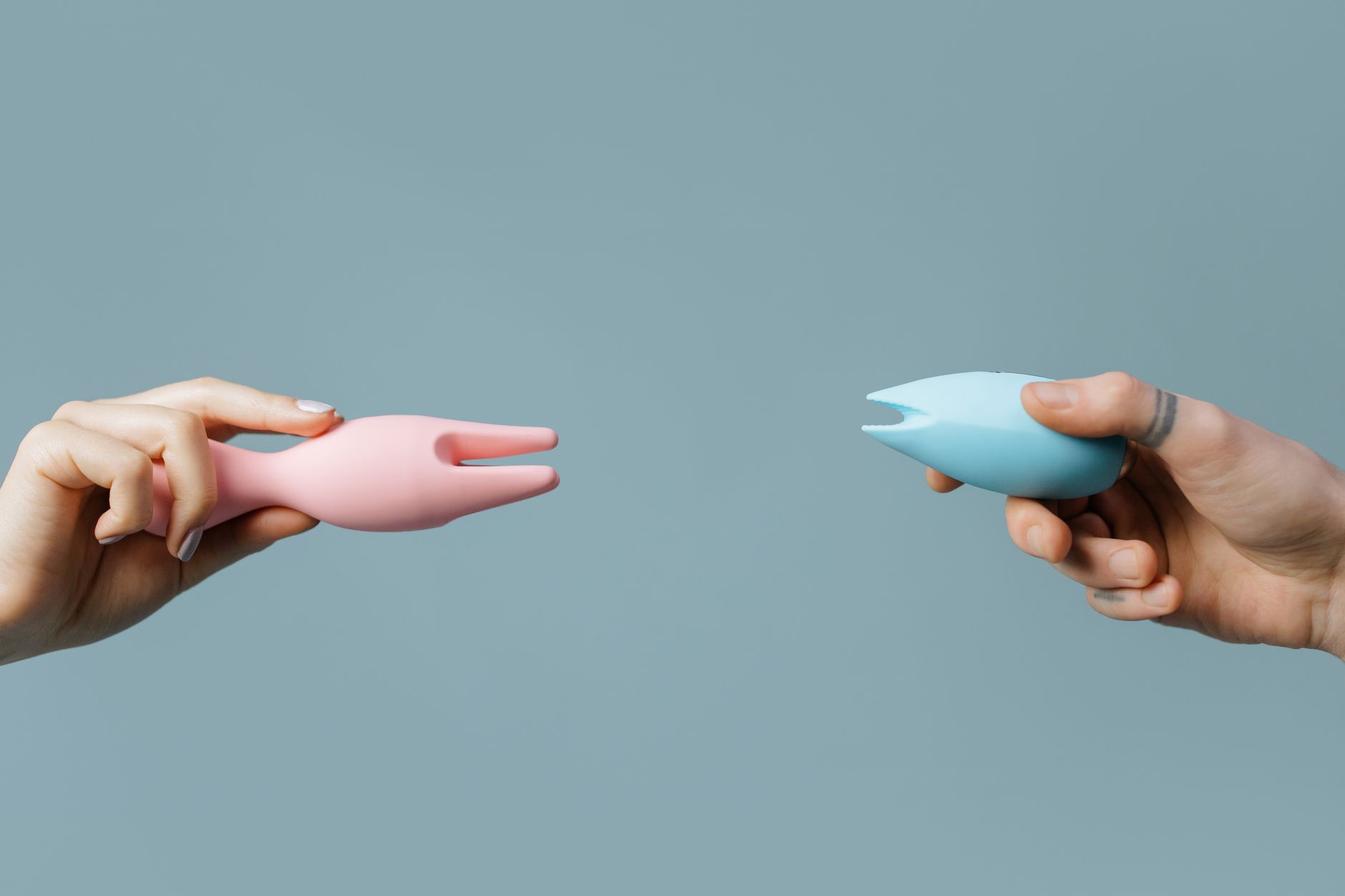
Let's talk about what surgery actually does to sensation
Surgery changes things. Sometimes it's temporary. Sometimes it shifts how your whole body talks to you. Whether you're recovering from gynecological surgery, abdominal work, or something else entirely, the nervous system has been interrupted. Tissues are healing. Scar tissue is forming. And if you're thinking about pleasure right now, your brain is probably sending mixed messages. Good. That's normal.
What's not always normal is how much information you get about this part of recovery. Most post-op instructions cover physical activity and wound care. Nobody mentions sex. Nobody mentions that sensation might feel too strong, too weak, or weirdly numb and hypersensitive at the same time. That's what we're talking about today.
Why sensation shifts after surgery
Three things happen in your body when you heal. First, the surgery itself interrupts nerve pathways. These nerves are waking back up as healing progresses, but they're waking up unevenly. Some areas might feel completely normal. Others feel like someone turned up the volume on everything.
Second, scar tissue changes how sensation travels through the area. This isn't permanent, but it's real while it's happening. Your nervous system has to learn new routes for signals. That takes time.
Third, your brain is probably protective right now. It's not sure if the area is safe. That protective instinct can make even light touch feel intense or uncomfortable.
The good news: this is temporary in most cases, and you can work with it instead of against it.
When to start and when to wait
Honestly, this one's between you and your surgeon. Most post-op guidance suggests waiting 6-8 weeks before any sexual activity, but that applies to penetration and partner activity. Solo exploration with a lemon clitoral vibrator is different because you have complete control. The intensity, the duration, how often. All you.
Check with your doctor about your specific recovery timeline, but generally speaking, if you're cleared for moderate exercise, you're probably cleared to try this. If you're still bleeding, still in significant pain, or still restricted from activity, wait. Your body will tell you when it's ready.
Start small. That's the whole rule.
The lemon vibrator approach for post-surgery sensitivity
A lemon clitoral vibrator is actually ideal for this phase of recovery because you're not dealing with internal penetration. You're working with external stimulation only. The suction-based sensation of a lemon vibrator is also gentler than direct vibration for hypersensitive tissue. It's stimulating without being aggressive.
Here's the step-by-step:
Week 1 to 2: Just looking. Hold your lemon vibrator. Don't turn it on yet. Get familiar with the shape, the weight, the texture. Let your brain stop seeing it as a tool and start seeing it as part of your toolkit.
Week 2 to 3: External exploration, no suction. Turn it on at the lowest setting, but don't apply it yet. Feel the vibration in your hand. Notice the sound. When that feels normal, place it gently against your inner thigh or the outer edges of your vulva. Not directly on the clitoris. Just proximity.
Week 3 to 4: Micro-application. Touch it lightly to the clitoral area for 3-5 seconds at a time. Pull away. Feel what happens in your body. If that's comfortable, try 10 seconds. You're teaching your nervous system that this is safe.
Week 4+: Gradual intensity building. Once light contact feels normal, you can start experimenting with slightly longer sessions. Move from setting 1 to setting 2 if you want to. But you don't have to. Some people find setting 1 is perfect for their post-surgery body, and that's completely valid.
The key is rhythm. Short contact, pause, notice, repeat. This is not about chasing an orgasm. This is about rebuilding a conversation between your nervous system and pleasure.
Managing hypersensitivity
If sensation feels too intense even on the lowest setting, you have options. Try using the lemon vibrator over clothing. A thin layer of cotton between your skin and the toy changes the intensity significantly. Or use it on the mons pubis, the area above the clitoris, where sensation is usually less acute.
Lubricant helps too. Not because anything's dry, but because it changes how the sensation travels across your skin. Water-based lube reduces friction and can make everything feel less sharp.
Take breaks. If you're doing this for 2 minutes and it feels overwhelming, stop. Your body isn't being difficult. It's recovering. Patience now prevents setbacks later.
Some people find that using their lemon vibrator works better on certain days of their recovery cycle. Maybe it's more comfortable two weeks post-surgery, then more sensitive a few days later. That's normal. Your healing isn't linear. Your sensation won't be either.
Building back to pleasure
There's a difference between mechanical response and actual pleasure. Early on, you might feel your body responding without feeling like you want it to respond. That's the nervous system doing its protective job. Keep showing up, keep being gentle, and the gap between those two things closes.
As weeks pass, you'll notice moments where sensation actually feels good again. Those moments get longer. More frequent. This is the part nobody talks about: the joy of rediscovering your own body.
Some people have their first post-surgery orgasm weeks later and are completely shocked by how different it feels. Different can be unsettling. But often, with time and patience, different becomes better. Your body's had time to heal. Your nervous system has adapted. You might find you're more present because you had to slow down.
What if sensation stays weird
If you're months past surgery and sensation still feels off, that's worth mentioning to your doctor. It's not a failure on your part. It's useful information for them. Sometimes scar tissue needs additional attention. Sometimes nerves heal slowly. Sometimes pelvic floor physical therapy helps dramatically. You don't have to just live with discomfort.
If sensation feels numb or missing entirely, ditto. That's also worth investigating, especially if it's affecting daily life, not just pleasure.
But most of the time, in most cases, gentle, consistent exploration with tools like a lemon clitoral vibrator combined with patience wins. Your body knows how to heal. It just needs time and the right conditions.
The mental piece
Let's be real: it's psychologically hard to feel like your body doesn't work the way it used to. Surgery creates loss. Even when it's necessary and helpful, you're grieving the simplicity of how things were. That grief is legitimate. It doesn't mean you're doing recovery wrong.
Take it seriously but not too seriously. You're not trying to perform. You're not trying to prove anything to anyone. You're just checking in with your own body and saying, "Hey, you and me, we're going to figure this out together."
That mindset shift makes everything easier. Using a lemon vibrator becomes less about achieving a goal and more about curiosity. And curiosity is how pleasure actually comes back.
People also ask
Can I use a lemon clitoral vibrator if I'm still having discharge or mild bleeding after surgery?
No. Wait until normal discharge returns and bleeding has stopped completely. Keep in mind that different surgeries have different healing timelines. Some stop bleeding within two weeks, others take longer. Your post-op instructions will give you a window. Once you're past it, you're good to go.
What if using my lemon vibrator causes pain?
Stop immediately. Pain is information. It's telling you something's not healed yet, or something's not right. Give it more time. If pain persists beyond your expected recovery window, check with your doctor before trying again. Pain during pleasure should not be part of recovery.
Is it normal for sensation to feel numb at first, then hypersensitive later?
Completely normal. Nerves wake up in stages. You might feel nothing for the first few weeks, then suddenly feel everything intensely. This is temporary. Keep using your lemon vibrator at low intensities, and the nervous system will eventually regulate.
Can my partner be involved in this process?
Yes, but with caution. This is primarily about you rebuilding your own sense of safety and sensation. If you want your partner involved, keep expectations low. They can be present, supportive, and hands-off. You're the one controlling the toy, the intensity, the timing. This is your recovery.
How long until sensation feels completely normal again?
Three to six months for most people. Some faster, some slower. It depends on the type of surgery, your healing rate, and your nervous system's sensitivity level. The important part is that it does typically normalize. Be patient with the timeline, but don't assume anything's permanent.
Should I use lubricant with my lemon vibrator during recovery?
Yes. Even if everything feels normal moisture-wise, lube reduces friction and makes sensation easier to manage. Water-based lube is safest for silicone toys. It also helps the sensation feel less sharp, which is especially helpful in early recovery.